How to Clean Mushrooms Properly: Easy Kitchen Tip
Introduction to Preparing Fresh Mushrooms
Home cooks learn how to clean mushrooms quickly and safely so they can remove stubborn grit without ruining the delicate texture of the fungi. Wild mushrooms are harvested in the wild, which often means extra field debris that needs careful removal before cooking.
Mastering this technique sets up an elevated culinary perspective for stress-free meal prep during busy weekdays. You will get clear methods for handling fresh produce efficiently while keeping your ingredients ready for high-protein prep bowls and elevated lunches.
Understanding Wild and Cultivated Varieties
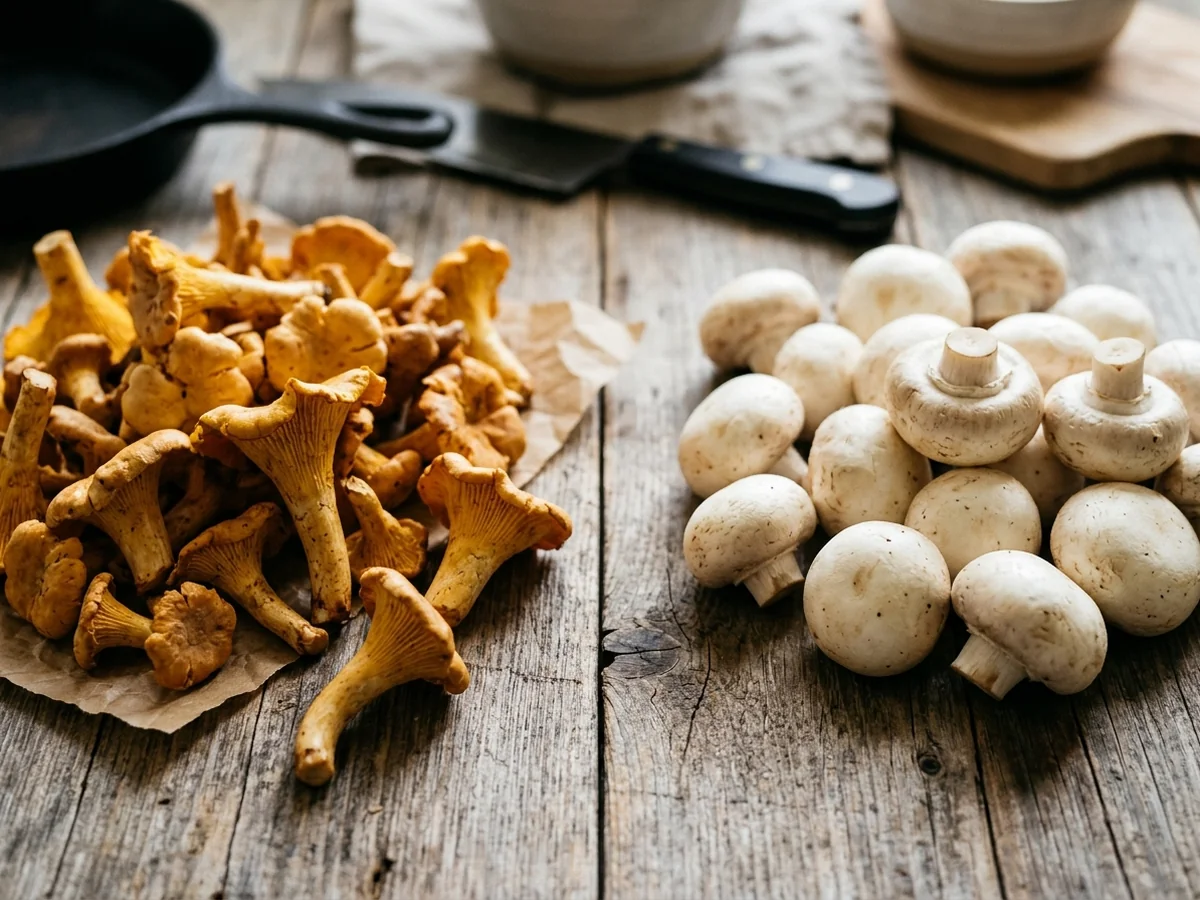
Wild mushrooms are harvested in the wild. This natural origin creates distinct handling and cleaning requirements compared to types grown in controlled environments. When you prepare ingredients for elevated weekday lunches or quick midday meals, understanding your starting point saves time and protects food texture. Different varieties carry varying amounts of debris based on where and how they grow, which dictates your kitchen prep steps and determines how to clean mushrooms efficiently.
Wild Varieties and Natural Debris
Wild varieties often feature deep crevices, irregular shapes, and stubborn particles of forest soil or pine needles. Because they grow exposed to weather and wildlife, they demand closer inspection during preparation. Home cooks often need a paring knife to trim away tough stem bases or gently scrape out trapped dirt from complex caps before cooking. When learning how to wash mushrooms collected from forests, patience is essential to remove grit without bruising the tender flesh.
Cultivated Types and Indoor Growth
Cultivated varieties typically grow indoors under controlled conditions, meaning they usually arrive in your kitchen with far less heavy dirt. Common grocery store varieties include smooth white buttons and large portobellos, which mostly just need a gentle wipe to remove loose peat moss or growing medium. Knowing where your ingredients originated helps you decide how much time to spend on prep work. Many culinary enthusiasts wonder do you wash mushrooms before cooking when dealing with standard store purchases, and the answer depends on the amount of visible residue rather than a strict rule against moisture.
Avoiding Common Cleaning Mistakes
A common mistake is treating every type with the exact same technique. While cultivated button mushrooms benefit from a quick pass with a damp paper towel or a fast rinse, wild varieties require a more thorough check. Because culinary guidelines often note that these fungi tend to soak up moisture during washing, keeping your cleaning method matched to the specific variety prevents waterlogged textures and preserves the natural flavor in your high protein prep bowls. If you are exploring the best way to clean fresh mushrooms for cold grab and go meals, remember that a brief rinse under cold running water is acceptable as long as you dry the caps immediately with a clean towel instead of letting them soak.
The Great Debate: Wiping Versus Rinsing
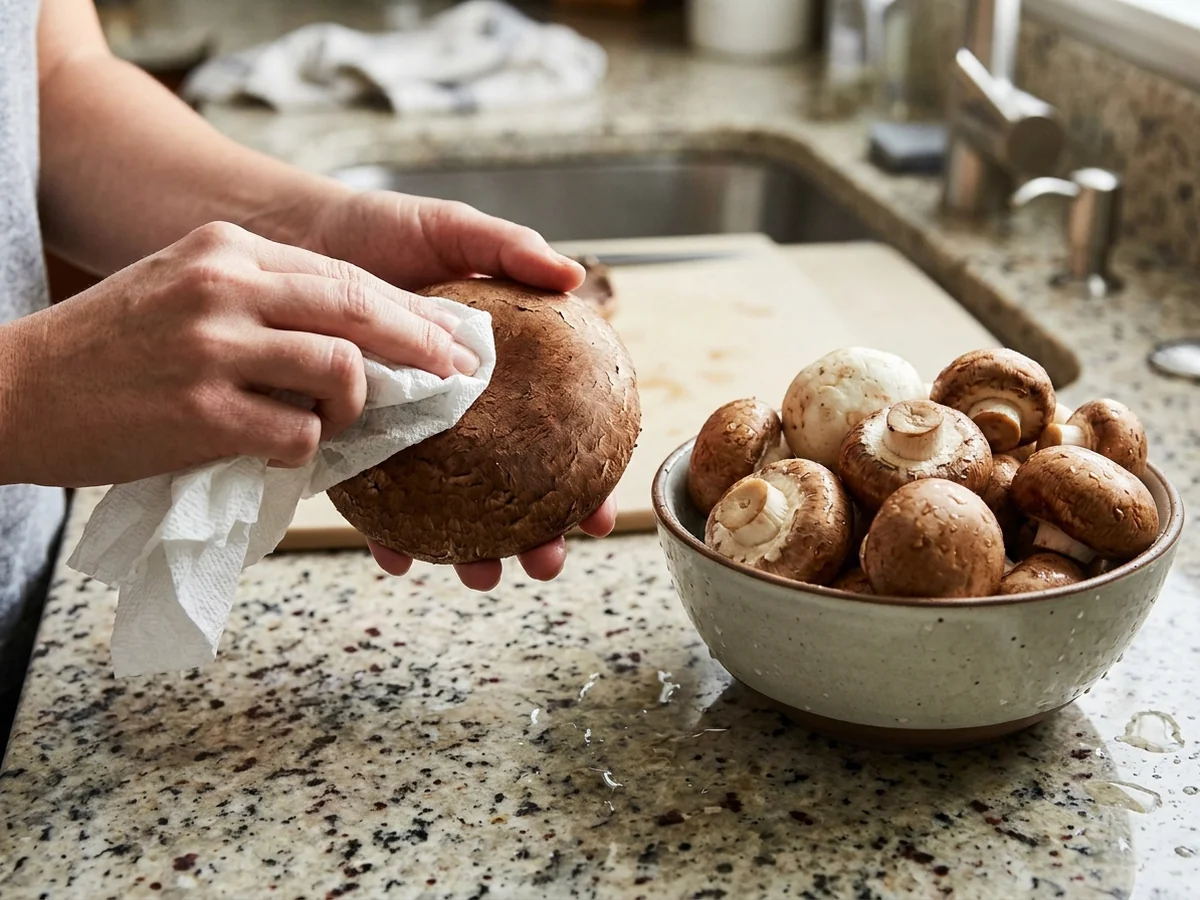
Home cooks often encounter common guidance suggesting that mushrooms absorb a massive amount of water when washed, which led to decades of reliance on a damp paper towel to scrub away dirt. This advice created a tedious kitchen routine where every single cap requires individual rubbing. However, water does not ruin the texture of button mushrooms and portobello mushrooms, contrary to popular kitchen myth. A quick rinse under the tap will not turn your produce into a soggy sponge.
Tests show that fungi absorb only a tiny fraction of moisture during a brief bath. You can safely submerge or rinse them without worrying about ruining your meal. Choosing to clean mushrooms with water actually speeds up prep time significantly compared to wiping each cap individually. A fast rinse removes stubborn soil from every crevice much better than dry rubbing ever could, making it the preferred method for anyone building elevated weekday lunches and high protein prep bowls.
The Problem with Dry Wiping
Relying exclusively on a paper towel often smears dirt across the surface or traps debris in delicate gills and stems, leaving an unpleasant gritty texture in the final dish. When figuring out how to wash mushrooms properly, home cooks often wonder if chefs wash mushrooms before cooking. Professional kitchens rely on speed and efficiency, meaning a quick water bath is standard practice rather than spending precious minutes on each individual cap with a dry cloth.
Step-by-Step Rinsing Technique
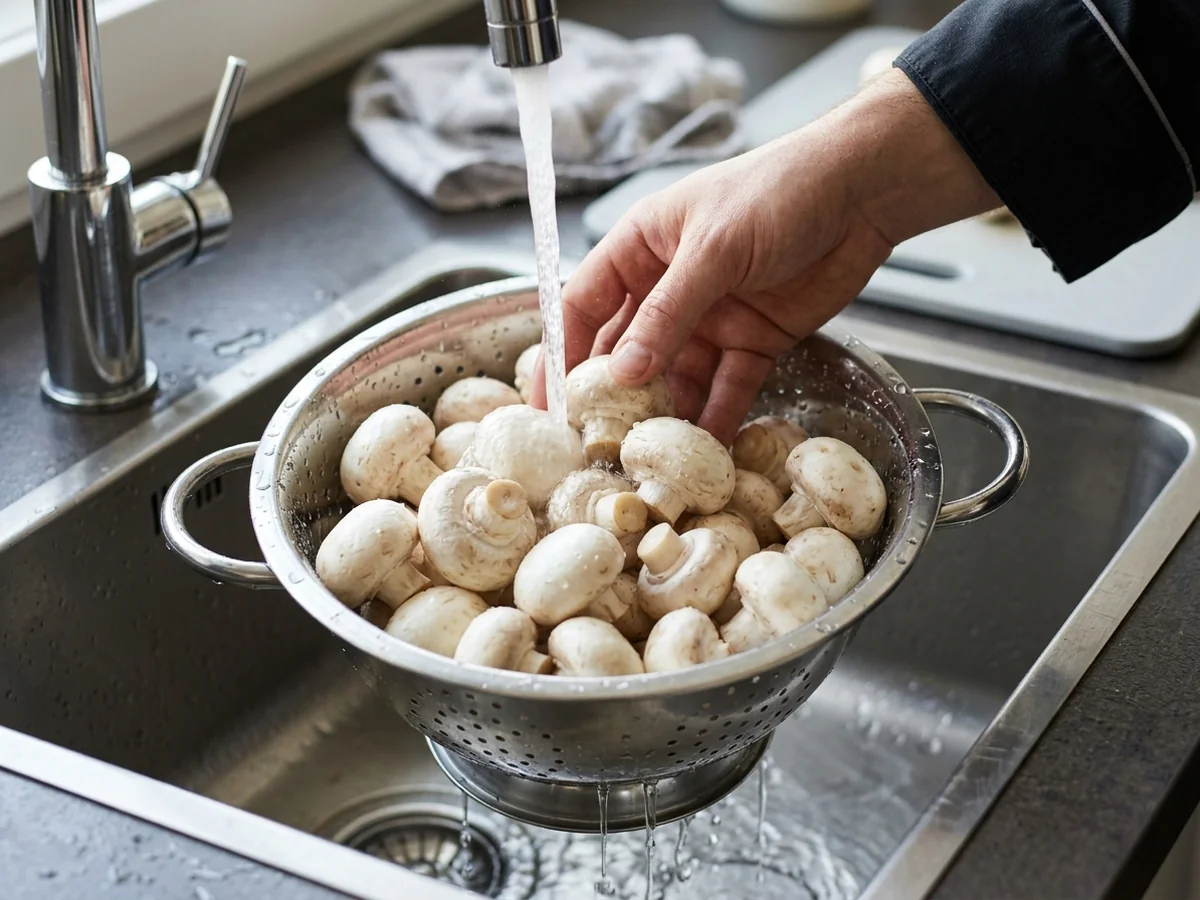
A few practical steps ensure success when rinsing fresh produce for your recipes. Place your ingredients into a colander, give them a quick rinse under cold running water, and immediately transfer them to a clean kitchen towel to pat them dry. Avoid soaking them for extended periods in standing water. This fast rinse followed by thorough drying gives you perfectly clean produce ready for cooking, saving you valuable time during your kitchen prep.
Wild Varieties and Origin
Handling requires slightly different attention depending on where the produce originates. Wild mushrooms are harvested in the wild, which means they often carry more forest debris, pine needles, and stubborn soil than commercially farmed varieties. Whether you are prepping delicate button varieties for a quick sauté or handling wild fungi for a rich sauce, a brief water bath combined with gentle trimming using a paring knife ensures all grit disappears before heat hits the pan.
Step by Step Cleaning Techniques for Different Varieties
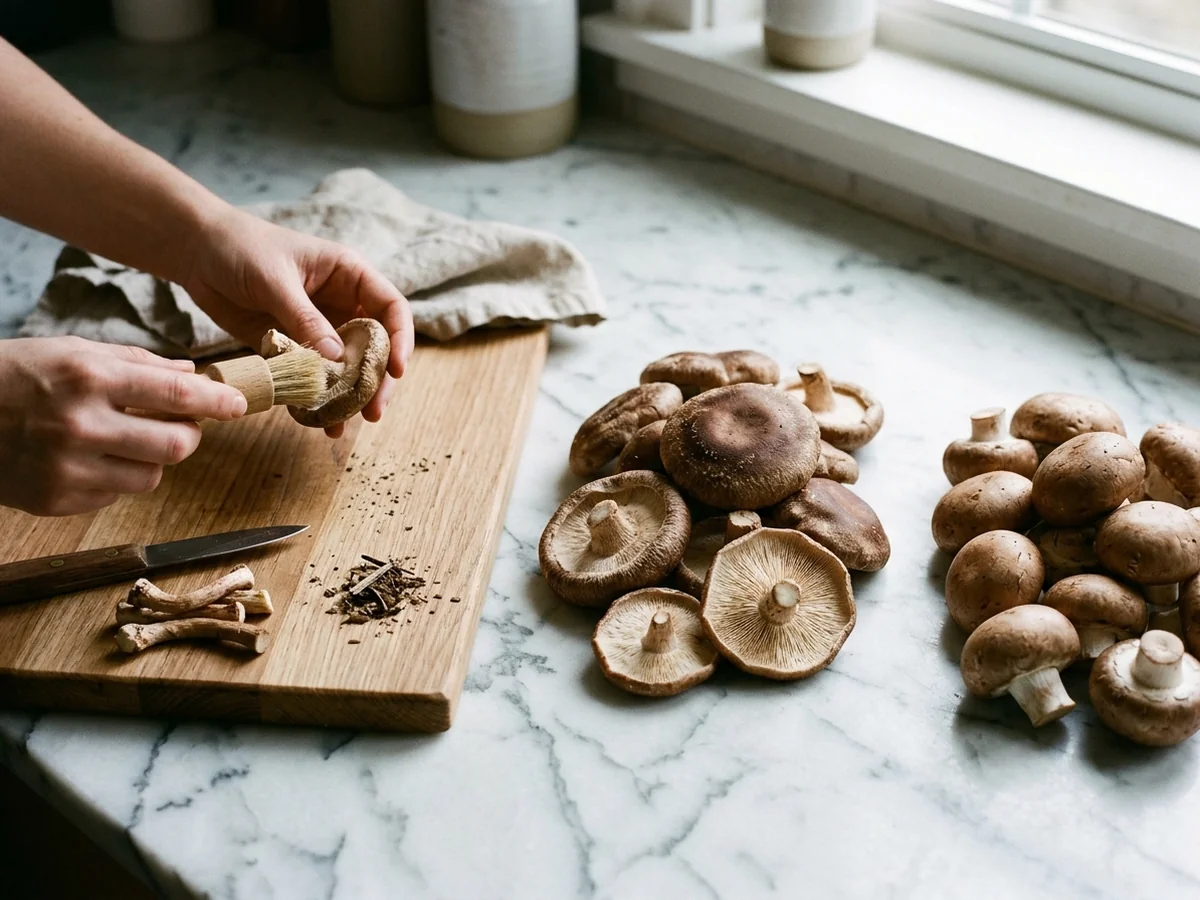
Properly managing different mushroom varieties requires matching your cleaning method to the texture of the cap and stem. Because these fungi hold onto moisture easily during washing, your approach should depend on whether you are handling sturdy fungi or delicate wild varieties. Mastering these practical kitchen techniques ensures your ingredients retain their structural integrity and cook up with the best possible flavor and texture for your meals.
- Wipe smooth and firm varieties: For standard button mushrooms, use a damp paper towel to gently lift surface dirt without making them soggy. This is the best way to clean fresh mushrooms quickly when you are preparing elevated weekday lunches or quick high protein prep bowls.
- Trim the stem ends: Use a sharp paring knife to slice away the dry, woody ends of the stems right before you begin cooking. This removes any lingering field dirt that the brush or towel might miss.
- Brush away stubborn soil: On textured caps, use a soft dry brush to sweep away dirt particles. This protects the delicate gills underneath from tearing or absorbing excess moisture.
- Rinse sturdy varieties with care: Portobello mushrooms have a robust structure, meaning you can rinse them quickly under a gentle stream of cold water if they carry heavy grit. Pat them completely dry right away with a clean paper towel to prevent waterlogging.
- Account for wild origins: Wild mushrooms are harvested in the wild, which often means they carry more forest debris, pine needles, and soil than cultivated options. Inspect the underside of each cap closely and use the tip of your knife to flick out trapped dirt from tight gill spaces before you start cooking.
A common mistake home cooks make is soaking mushrooms in a bowl of water for too long. Because these fungi act like natural sponges, prolonged soaking leads to a rubbery texture and prevents proper browning in the pan. Another frequent error is skipping the inspection phase on textured caps, which leaves gritty soil in your finished dish. By tailoring your cleaning method to the specific variety and keeping moisture exposure to a strict minimum, you protect both the texture and the earthy taste of your ingredients.
Chef Tips for Washing
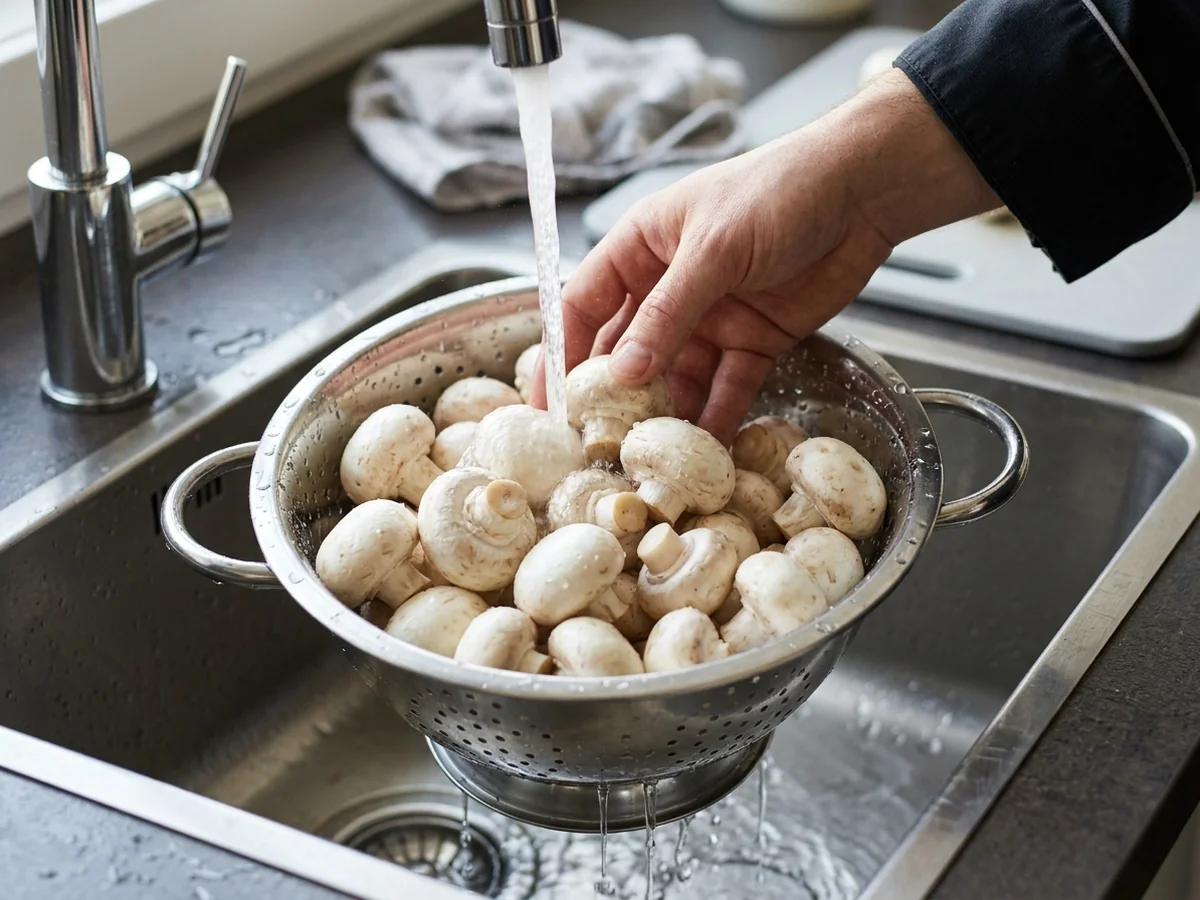
Professional chefs generally do wash mushrooms before cooking despite the old myth about avoiding water entirely. Many culinary experts rinse them quickly under cold running water or submerge them briefly to remove stubborn grit, provided you dry them immediately afterward. The main reason professionals embrace a fast rinse comes down to efficiency in busy kitchens where removing every speck of dirt by hand is simply not practical.
Wild mushrooms are harvested in the wild, meaning they often require a great deal of attention to clear away forest debris, pine needles, and soil before hitting the pan. Cultivated varieties also pick up dirt during the growing and harvesting process, so a quick rinse will not ruin them. Understanding how to clean button mushrooms and larger varieties like portobello mushrooms starts with respecting how much liquid these porous fungi can take in.
The Water Absorption Debate
Common guidance notes that these porous fungi tend to take in significant amounts of moisture during a wash, which is why speed matters in the sink. Letting them soak for too long ruins their firm texture and makes proper browning nearly impossible during cooking, leaving you with a soggy result instead of a crisp exterior. To avoid this common mistake, keep your prep station organized and move quickly from the colander to the cutting board.
When preparing ingredients for elevated weekday lunches, knowing whether you need a full rinse or just a gentle wipe changes your workflow. Delicate wild varieties benefit from gentle attention, while sturdier fungi handle a brief splash without losing their structural integrity.
Step-by-Step Rinsing Protocol
Organizations like the USDA, the Mushroom Council, and educational resources from groups like the Institute of Culinary Education provide helpful handling guidelines for home cooks preparing fresh produce. Following these official recommendations ensures your ingredients remain safe and flavorful for high protein prep bowls or quick lunches.
- Rinse fungi quickly under cold running water rather than letting them soak in a basin.
- Pat each cap dry with a clean paper towel right away to remove excess surface moisture.
- Trim off any tough stem ends with a sharp paring knife before cooking to ensure even textures.
- Use a damp paper towel for delicate varieties that only need light surface dusting.
Wiping Versus Rinsing Techniques
Deciding on the best way to clean fresh mushrooms depends entirely on the variety you bought and how much dirt is clinging to the surface. If you are handling delicate chanterelles or specialty fungi, a damp paper towel prevents waterlogging while still lifting away surface grime. Button mushrooms and portobellos tolerate a fast cold rinse much better because of their dense outer skin.
When you master the correct method for how to wash mushrooms without oversaturating them, your cooking yields much better flavors and textures. Whether you are prepping ingredients for a cold grab and go meal or a warm midday plate, treating your produce with care makes all the difference in your daily kitchen routine.
Handling Stubborn Dirt and Trimming Stems
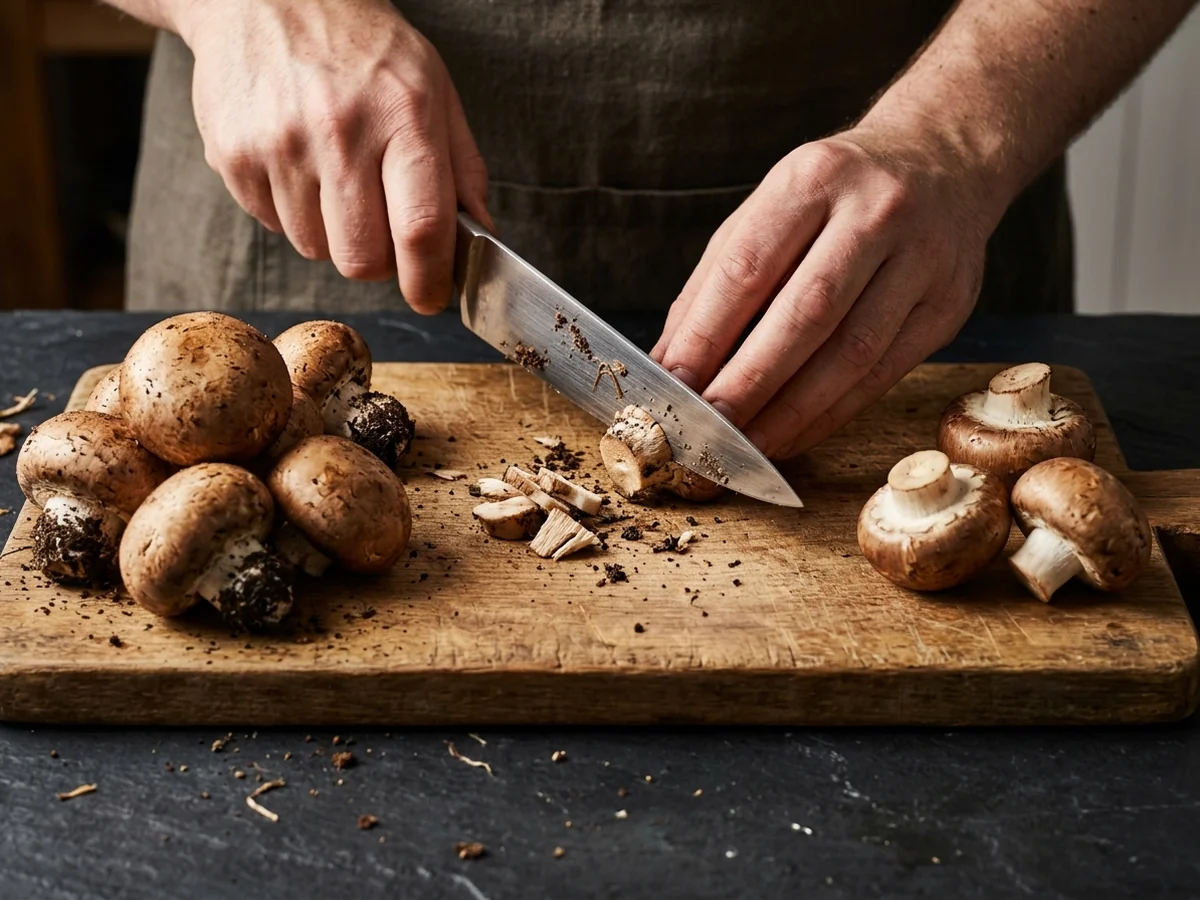
When preparing fresh ingredients for elevated weekday lunches or quick prep bowls, stubborn dirt spots and tough stem ends require targeted physical removal rather than aggressive washing. Wild mushrooms are harvested in the wild, so they often arrive with extra grit tucked tightly into their folds compared to standard grocery store varieties. Take your time inspecting each cap and crevice to ensure your meal stays grit free.
Targeted Scaping for Stubborn Spots
Grab a paring knife to gently scrape away stubborn dirt and debris stuck on the outer surfaces without gouging the tender flesh beneath. Delicate caps need a light touch so they stay intact during prep. If you encounter heavy soil patches, avoid soaking the fungi, as excess moisture tends to compromise their texture during cooking. A methodical approach with your paring knife preserves both the structural integrity and the rich flavor of your ingredients.
Trimming Tough Stems Correctly
Trim away only the fibrous, dry ends of the stems to avoid food waste while keeping the edible parts ready for your meal. Many home cooks make the mistake of chopping off entire stems, but the upper stem sections are entirely edible and hold great flavor. Use the tip of your paring knife to gently flick away clinging soil or dark spots from the cap while leaving the delicate gills underneath untouched to preserve the texture you want to clean mushrooms effectively before cooking.
Practical Steps for Stem Prep
- Slice off the very bottom of the stem where it looks woody or dry, leaving the flavorful upper portion attached for your recipe.
- Use the tip of your paring knife to gently flick away clinging soil or dark spots from the cap surface without applying heavy pressure.
- Leave the delicate gills underneath untouched to maintain proper texture and prevent the caps from breaking apart prematurely.
Post-Cleaning Storage and Shelf Life Guidelines
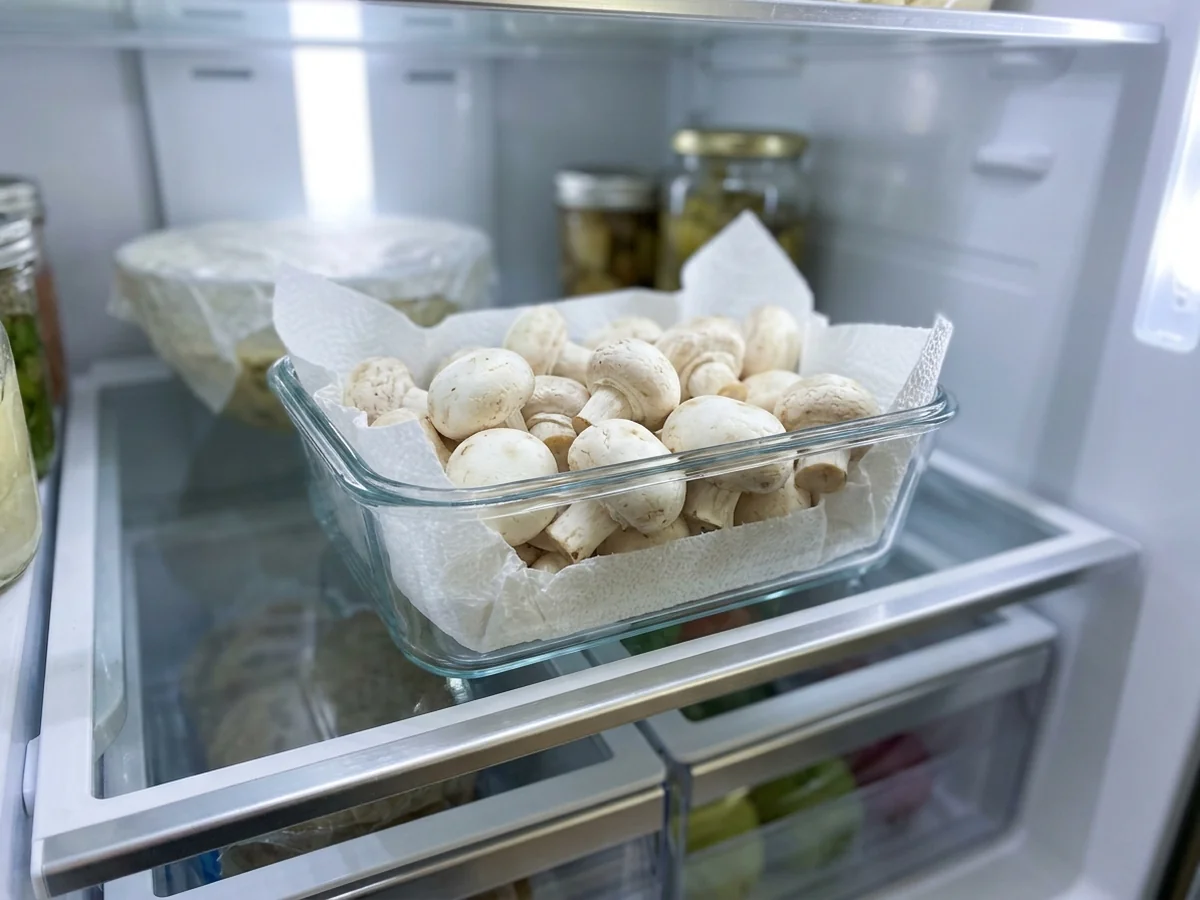
Properly stored produce usually lasts for several days in the refrigerator after you clean mushrooms for your weekly meals. Moisture management remains the key factor in determining how long your ingredients stay fresh, especially since button mushrooms and portobello mushrooms tend to degrade quickly when exposed to excess humidity.
Keep your damp ingredients in a breathable container, such as a paper bag or a container lined with a dry paper towel. Avoid airtight plastic containers because trapped condensation accelerates spoilage and ruins the texture. If you are preparing ingredients in advance for your weekly meals, understanding proper preparation methods ensures that your produce maintains its structural integrity during refrigeration.
When incorporating these ingredients into meal prep bowls and cold lunches, store them separately from wet components until you are ready to eat. This simple habit keeps your lunches fresh, crisp, and flavorful throughout the work week. Proper post-cleaning organization prevents premature rotting and helps you get the most out of your grocery trip.
To maximize shelf life and avoid common storage mistakes, follow these practical steps:
- Pat the caps completely dry with a clean paper towel immediately after wiping away any dirt or debris.
- Transfer the produce into a brown paper bag, which naturally absorbs residual surface moisture while preventing the caps from drying out entirely.
- Place the container on a main refrigerator shelf rather than the high humidity crisper drawer to limit exposure to excess water vapor.
- Keep unwashed portions separate from pre-cleaned batches so that moisture does not spread across your entire inventory.
A frequent mistake home cooks make is storing damp fungi inside sealed plastic zip bags or tightly closed plastic containers. This traps natural respiration and condensation, turning the outer surface slimy within a single day. Another common error is washing a large batch days before cooking when you only need a few pieces at a time. Always clean only what you plan to use immediately, leaving the rest of the batch unwashed in its original packaging until your next cooking session.
Best Tools for Prep
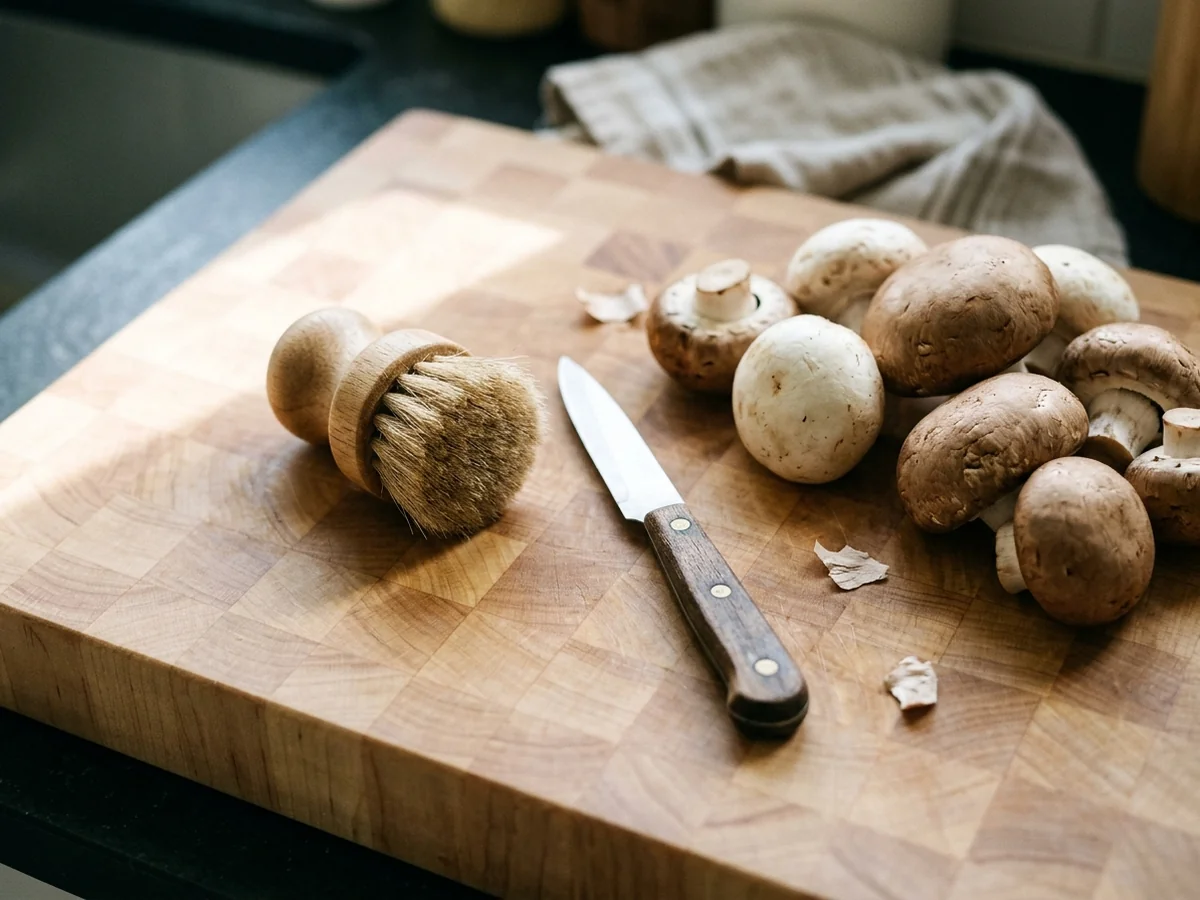
Having the right kitchen equipment on hand makes it much easier to clean mushrooms without ruining their delicate texture before you cook them. Whether you are prepping ingredients for high-protein prep bowls or simple weekday lunches, protecting the fungi from water damage speeds up your routine and ensures better results on the plate. Because wild mushrooms are harvested in the wild, and because all varieties tend to absorb a lot of water when washed, choosing dry cleaning methods over soaking is essential for maintaining proper flavor and firmness in your ingredients.
Essential Cleaning Implements
To prep your produce correctly, keep a few fundamental tools ready in your workspace:
- Damp paper towel: Wiping away surface dirt from button mushrooms and portobello mushrooms gently without saturating the flesh is a preferred method for fresh produce.
- Soft pastry brush: Ideal for brushing away fine particles from delicate caps and gills without tearing the skin.
- Paring knife: Useful for trimming tough stem ends, slicing away stubborn spots, and preparing uniform pieces for the pan.
- Colander: Helpful only if a quick rinse is absolutely necessary, though excess moisture should always be patted dry immediately.
Technique and Common Pitfalls
A common mistake home cooks make is submerging fungi in a bowl of water to remove grit. This causes the porous flesh to take on excess liquid, which ruins the sear and leads to steaming instead of browning. Knowing the proper cleaning approach for mushrooms without going overboard protects both your recipe and your cooking time. If you wonder do you wash mushrooms before cooking, professional chefs generally prefer a quick wipe rather than a heavy bath to preserve structural integrity.
Mastering these basic produce handling techniques elevates everyday meals effortlessly. If you want to refine your knife skills and learn more advanced kitchen techniques from professional chefs, consider signing up for local culinary class promotions or intensive culinary boot camps.
Frequently Asked Questions About Washing Mushrooms
What is the proper technique for preparing fresh fungi?
The correct method depends on how dirty they are, but a quick rinse under cold water followed by thorough drying with a paper towel works well for most varieties. Avoid soaking them in water for too long because mushrooms can absorb moisture and become soggy during cooking.
Do chefs wash mushrooms before cooking?
Many professional chefs do wash mushrooms with water despite the old myth that you should only wipe them. Gordon Ramsay famously rinses his mushrooms quickly under running water to remove stubborn grit, as long as they are dried immediately before hitting a hot pan.
Is it necessary to clean mushrooms before preparation?
Cleaning mushrooms before cooking is always necessary to remove residual growing medium, dirt, and debris from the surface. Wild mushrooms are harvested in the wild, meaning they frequently carry more forest debris and need careful inspection than indoor varieties.
Can you clean button mushrooms with a damp paper towel?
Wiping button mushrooms with a damp paper towel is a reliable method if you only need to remove a light dusting of dirt. This technique prevents the fungi from taking on extra water when you are in a rush.
How do you handle stubborn dirt on mushroom stems?
Stubborn dirt on stems can be trimmed away easily using a small paring knife. You can also brush away dry soil gently with a soft vegetable brush before cooking.
Summary of Proper Fungi Preparation
Mastering how to clean mushrooms keeps your weekday lunches stress free and your ingredients pristine. A quick wipe with a damp paper towel removes dirt without waterlogging the caps, ensuring rich flavour every time. You can now approach meal prep with confidence, knowing your produce is ready for the pan.
Sources: agr.georgia.gov
You might also like: Hello world!