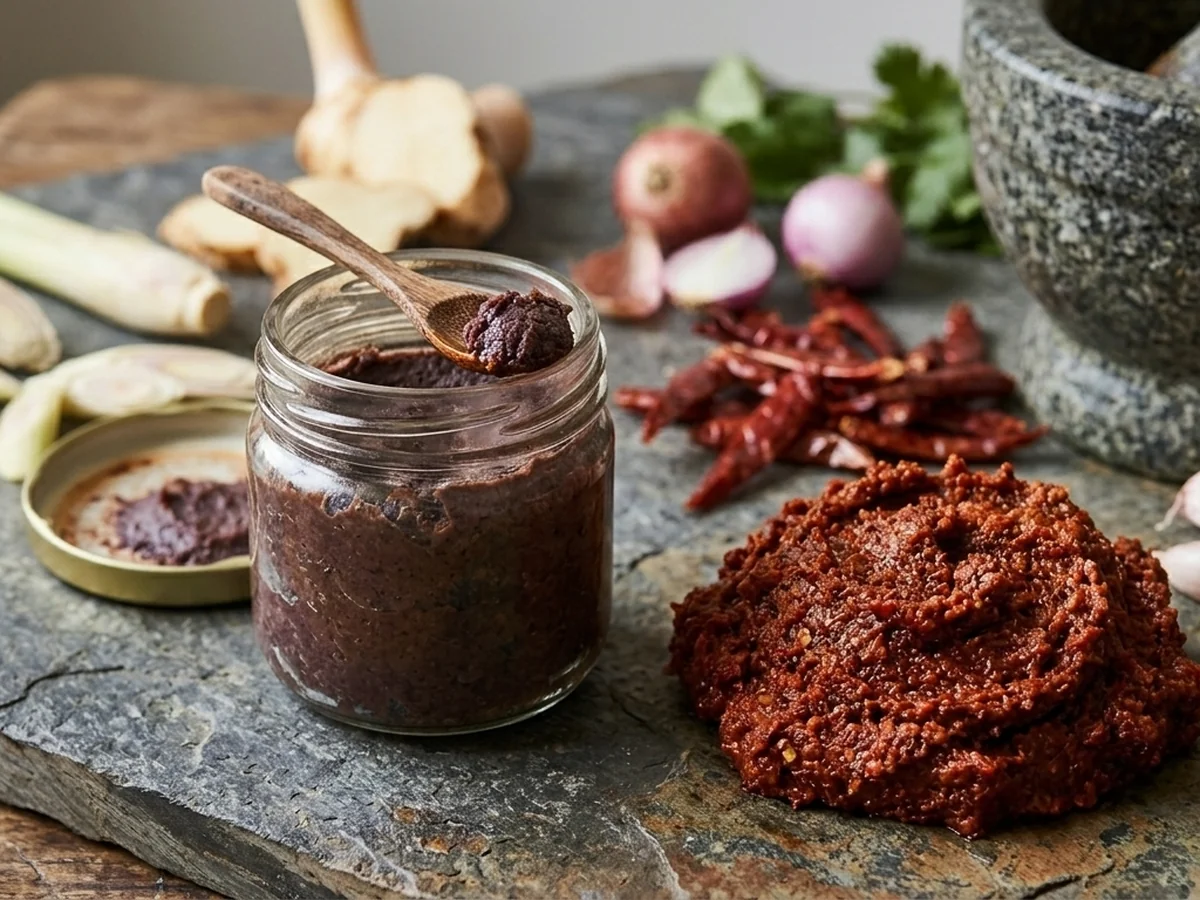
Thai Red Curry Paste Recipe: Authentic Homemade Paste
Introduction
You can create authentic thai red curry paste by blending specific aromatic roots, herbs, and dried chillies into a uniform, flavorful base. Making this classic condiment at home allows you to control the freshness of ingredients like galangal and lemongrass while achieving a depth of flavor that store-bought versions often lack.
This guide covers the essential components of the recipe, including the proper preparation of dried red chillies and the role of fermented shrimp paste in building complexity. You will learn the traditional techniques for balancing citrusy notes with savory undertones, as well as why homemade versions typically result in an orange hue compared to commercial products. Whether you are using a mortar and pestle or a blender, the following instructions ensure your kitchen is equipped to produce a professional-grade base for your next meal.
Authentic Thai Red Curry Paste
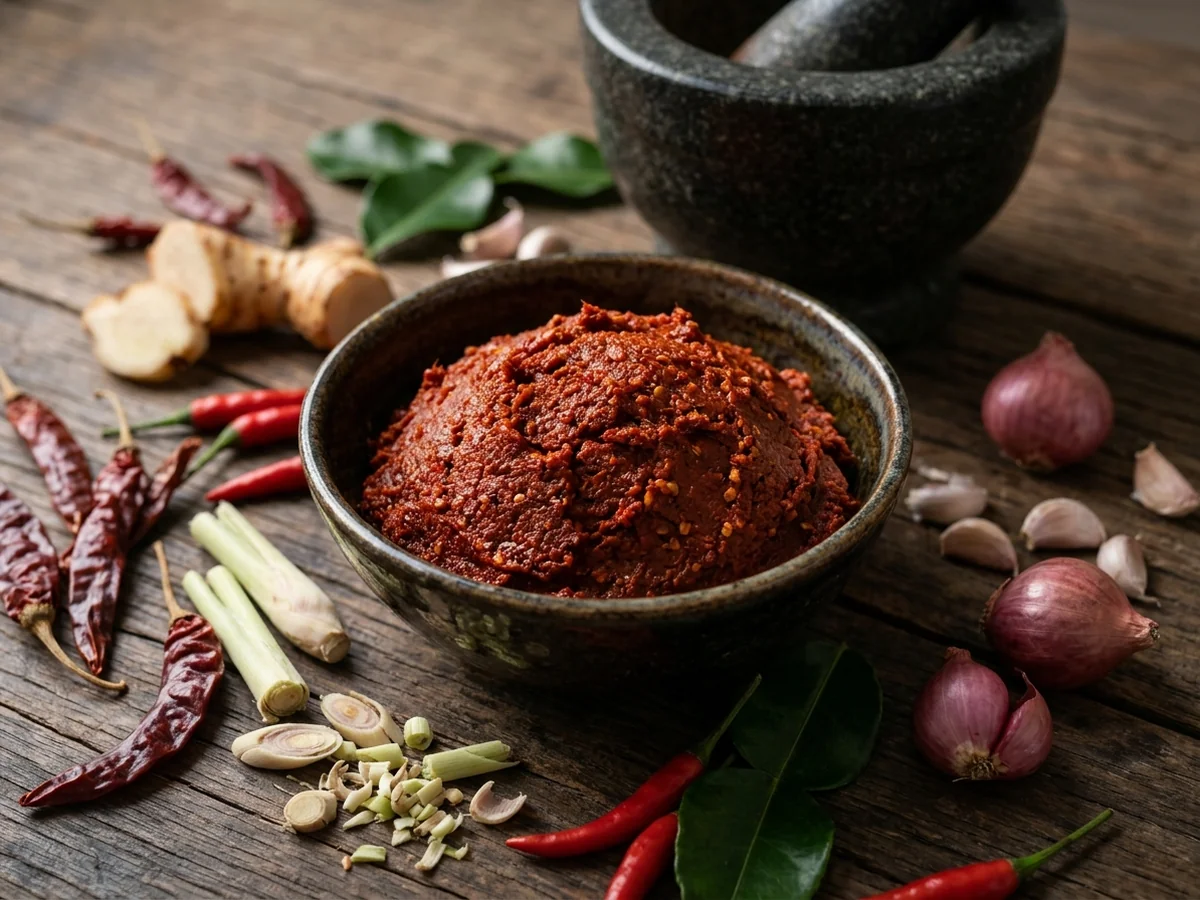
Creating your own foundation for weekday lunches transforms a simple bowl into a vibrant, restaurant-quality meal. By moving away from pre-packaged options, you control the intensity and freshness of your ingredients. While commercial versions often feature a uniform, deep red appearance, homemade blends typically result in a natural orange hue. This difference in color is a hallmark of using fresh, whole ingredients.
Essential Aromatics and Preparation
Building an authentic Thai red curry paste requires attention to specific preparation methods for your aromatics. Dried red chillies require hydration in boiled water before blending to ensure a smooth consistency. This step is essential for achieving the right texture and allows the dried chillies, which are commonly preferred for their earthy flavor profile, to release their full potential.
Understanding your ingredients helps you master the balance of flavors:
| Ingredient | Characteristic |
|---|---|
| Galangal | Typically harder to cut than ginger and possesses a more citrusy flavor profile. |
| Shrimp paste | A fermented, dried product made from shrimp that provides an essential umami backbone. |
| Lemongrass | Adds necessary brightness and aromatic depth. |
Mastering the Blend
Using a mortar and pestle is the traditional way to release the natural oils from these fibrous ingredients, resulting in a cohesive blend that is difficult to replicate with a machine. If you choose the convenience of a modern blender, pulse the ingredients in short bursts to avoid heating the paste, which can dull the fresh aromatics. Because galangal and lemongrass are particularly fibrous, fine mincing before they hit the blade will help you achieve a smoother consistency.
When preparing your ingredients, remember that the preparation of the chillies is the most critical step for texture. If you are concerned about heat, consider that the spice level of the final blend is determined by the specific variety and quantity of the chillies used. For those seeking a milder result, blending a smaller amount of the hydrated chillies while keeping the rest of the aromatic base intact is a practical adjustment.
By investing a small amount of time during your weekend prep, you ensure that your lunches are built on a foundation of authentic flavor. Storing your finished paste in an airtight container in the refrigerator for up to one week, or freezing it in individual portions for up to three months, keeps your workday meals efficient, intentional, and rewarding.
Essential Ingredients for Authentic Paste
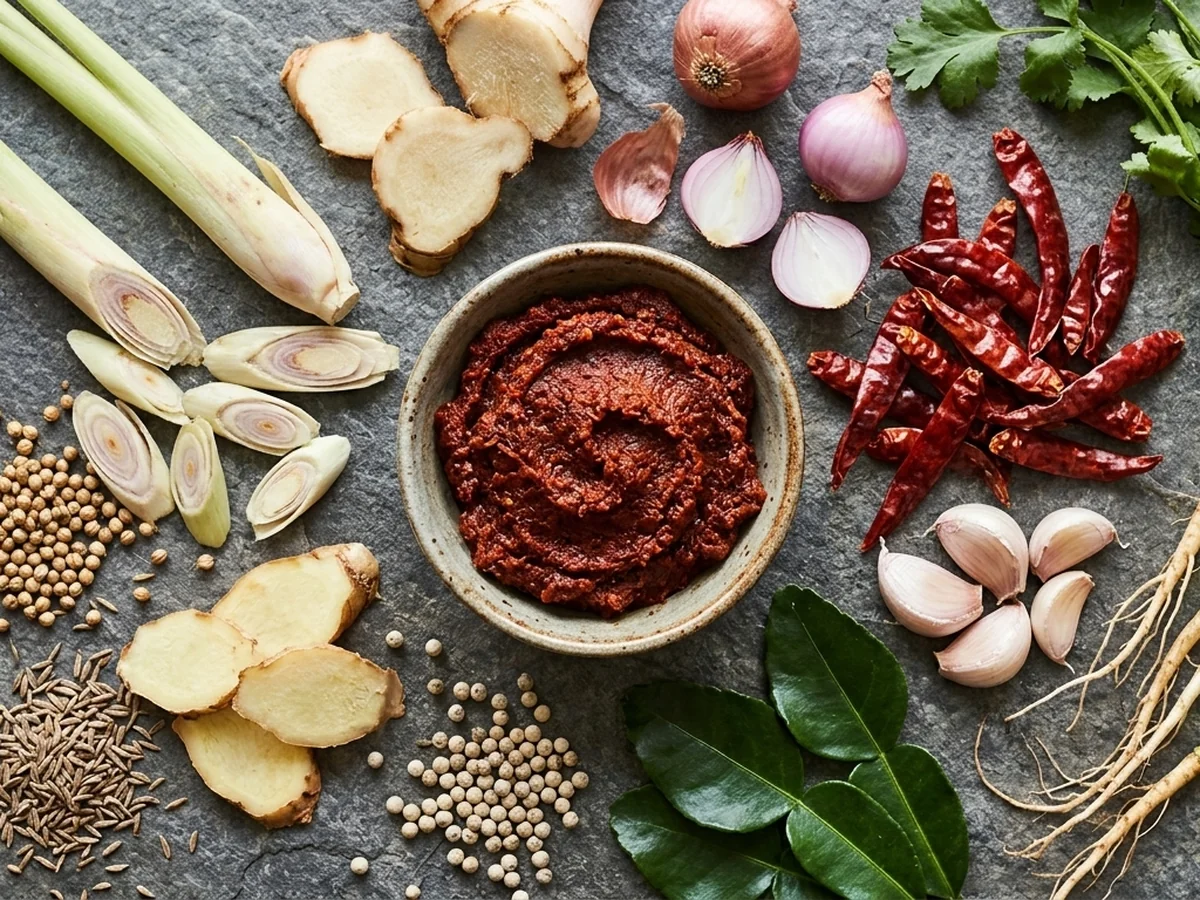
Building a robust aromatic profile is the foundation of high-quality Thai red curry paste. By selecting specific fresh and dried elements, you create a complex, balanced base that defines the dish’s character. Understanding the role of each component allows you to master the process of how to make homemade red curry paste while maintaining the integrity of the original flavor profile.
The selection of authentic Thai red curry paste ingredients typically follows a specific balance of aromatics and heat:
- Dried Red Chillies: These are preferred over fresh alternatives for their deep, earthy flavor. As verified by New Mexico State University, dried red chillies require hydration in boiled water before you begin blending them into the paste. This step is crucial for softening the skin and ensuring a smooth, uniform consistency.
- Galangal: Often compared to ginger, galangal is a traditional aromatic. While they share a similar appearance, galangal is physically harder to cut than ginger and possesses a more distinct, citrusy flavor profile that is essential for the authentic taste.
- Lemongrass, Kaffir Lime Zest, and Coriander Root: These ingredients serve as the backbone of the aromatic base. Using fresh coriander root, rather than just the leaves, provides a deeper, more concentrated herbal note.
- Shallots: These provide a necessary sweetness and body to the mixture, balancing the sharp heat of the chillies.
- Shrimp Paste: This is a common inclusion in traditional recipes. It is typically a fermented, dried product made from shrimp, which adds a savory, umami depth that is difficult to replicate with other ingredients.
When you assemble these components, keep in mind that the final result often looks different from commercial versions. While store-bought options are often a vibrant, uniform red, homemade versions typically result in a more natural orange hue. This difference in appearance is normal and simply reflects the use of whole, fresh, and dried components rather than the industrial processing methods found in mass-produced alternatives.
A common mistake during preparation is failing to process the harder ingredients, such as galangal and lemongrass, into a fine enough paste. If these are left in larger, fibrous pieces, the texture of your finished curry may be compromised. Using a mortar and pestle is the traditional method to ensure the oils of the aromatics are fully extracted and emulsified, though a food processor can be used if you take care to blend until the mixture is completely homogeneous.
Mastering Dried Chilli Preparation
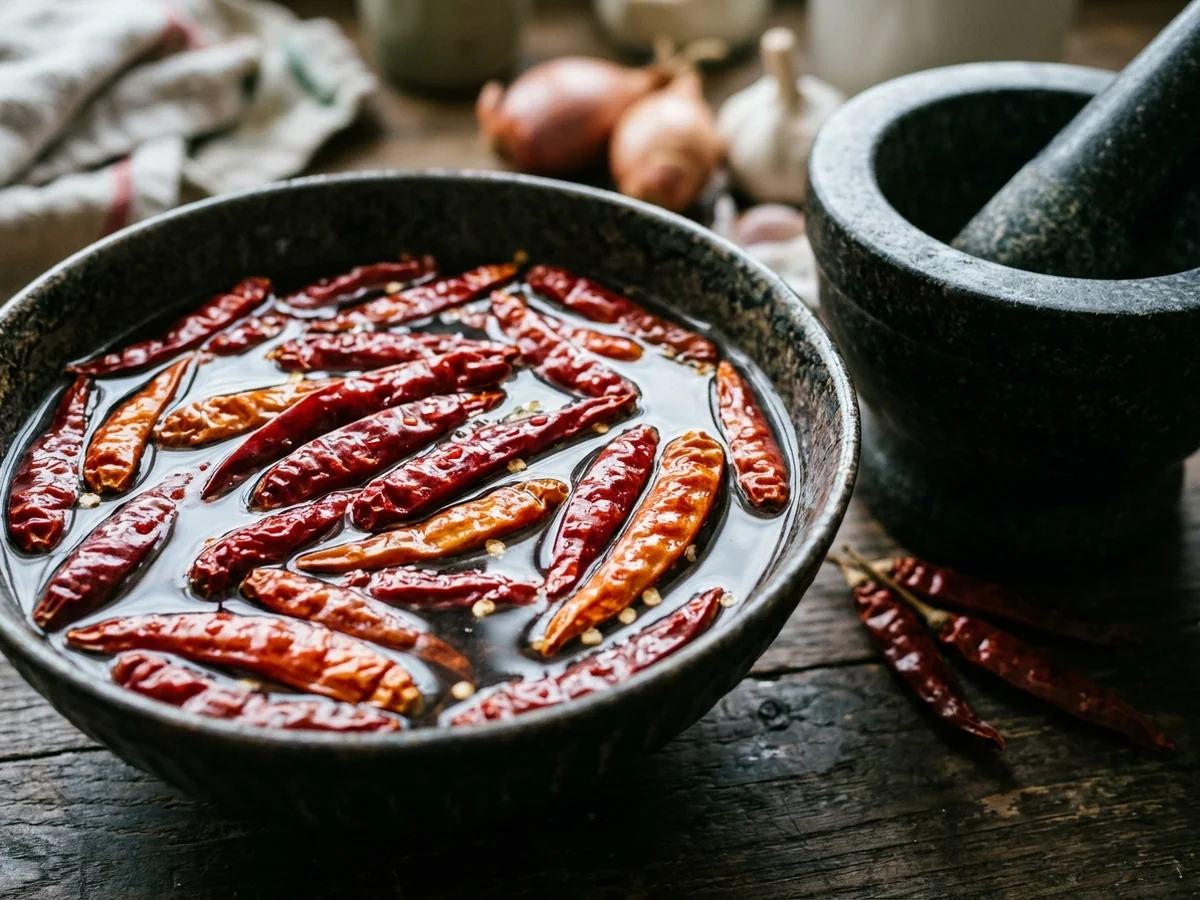
Dried red chillies require hydration in boiled water before blending. This step is essential for achieving the smooth, consistent texture necessary for authentic Thai red curry paste ingredients. When dry, these pods are tough and fibrous. Hydrating them transforms their structure, allowing the blender or mortar and pestle to break them down into a uniform paste rather than leaving behind gritty, unappealing flakes.
The Hydration Process
To prepare your chillies, place them in a heat-proof bowl and submerge them completely in boiling water. If the pods float, use a small plate or a weighted lid to keep them fully immersed. Let them soak until the skins are pliable and soft to the touch. This process also helps extract the natural oils stored within the dried flesh, which is vital for developing the deep, earthy flavor profile that defines traditional recipes.
Once softened, drain the liquid thoroughly. Retaining excess water can dilute the concentration of your base, so squeeze the pods gently to remove moisture before adding them to your aromatics.
Common Myths and Visual Expectations
A common misconception among home cooks is that removing the seeds from dried chillies will significantly reduce the heat of the final mixture. In reality, the heat intensity is primarily determined by the specific variety of pepper used, such as the potent dried bird’s eye chili. Choosing the right variety gives you far more control over the spice profile than the time-consuming process of deseeding.
When preparing your paste, you may notice a difference in appearance compared to commercial options. While store-bought versions often achieve a vibrant, deep red hue, homemade versions typically result in a more natural orange color. This is normal and reflects the genuine blend of ingredients.
Furthermore, as you prepare your base, remember that other components require specific handling. For instance, it is typical practice to note that galangal is physically harder to cut than ginger and possesses a more distinct, citrusy flavor profile. Similarly, shrimp paste is commonly understood to be a fermented, dried product made from shrimp that adds a necessary savory depth. By mastering the preparation of your dried chillies first, you create a solid foundation for emulsifying these other fresh components like lemongrass and kaffir lime zest into a cohesive and flavorful paste.
The Role of Shrimp Paste

Shrimp paste is widely recognized as a fermented, dried product made from shrimp, and it serves as the essential foundation for authentic Thai red curry paste. Its primary purpose is to provide a deep, savory umami base that anchors the brighter, sharper aromatics like lemongrass, galangal, and Kaffir lime zest. Without this fermented element, the flavor profile of the curry often lacks the necessary complexity to balance the heat of the chillies.
The fermentation process fundamentally alters the raw shrimp, breaking down proteins into amino acids. This creates a dense, pungent concentration of flavor that is difficult to replicate with other ingredients. When you are learning how to make homemade red curry paste, it is helpful to understand that this ingredient is not meant to be tasted in isolation. Instead, it works as a bridge, mellowing out the intensity of the aromatics and providing a rounded, long-lasting finish to the final dish.
Managing Alternatives
If you are navigating dietary restrictions, you might look for substitutes for shrimp paste in curry. While no single ingredient perfectly mimics the specific fermented funk of the original, some alternatives can provide a similar savory impact. When using these, it is best to add them in small increments and taste your mixture frequently to maintain the balance of the blend.
| Alternative | Flavor Profile | Usage Tip |
|---|---|---|
| Miso Paste | Fermented, salty, earthy | Use a light-colored miso to avoid overpowering the other flavors. |
| Fish Sauce | Briny, sharp, savory | Adds saltiness but lacks the thick, paste-like consistency. |
| Vegetarian Stir-fry Sauce | Concentrated, savory | Often contains mushroom extracts that provide a deep umami boost. |
Common Preparation Considerations
When working with these aromatics, the method of preparation is just as important as the ingredients themselves. Dried red chillies require hydration in boiled water before blending to ensure they break down into a smooth paste. While many home cooks strive for the bright red color seen in store-bought versions, it is important to note that homemade red curry paste typically results in an orange hue. This difference in color is normal.
Furthermore, when preparing your ingredients, keep in mind that galangal is physically harder to cut than ginger and possesses a distinctively citrusy flavor profile that is central to the dish. Using a mortar and pestle is the traditional way to extract the maximum flavor from these ingredients, though a blender remains a practical option for busy weekday kitchens.
Mortar and Pestle vs Blender

When you decide to make authentic Thai red curry paste, the choice between a mortar and pestle and a mechanical blender significantly influences the final result. Traditional preparation relies on the mortar and pestle to methodically crush fibers, which helps release essential oils more effectively than high speed blades. While blenders offer convenience for busy schedules, manual grinding produces a cohesive, well-integrated texture that mechanical blending often fails to replicate.
| Feature | Mortar and Pestle | Blender |
|---|---|---|
| Texture | Cohesive and fine | Can be uneven |
| Extraction | Optimal oil release | Limited oil release |
| Preparation | Labor intensive | Quick and easy |
| Requirements | Physical effort | Extra liquid often needed |
Understanding the physical demands of your ingredients is key to choosing the right tool. Galangal is typically considered physically harder to cut than ginger and possesses a more citrusy flavor profile. Because of its fibrous nature, a blender often struggles to process it adequately without the addition of extra liquid, which can alter the desired consistency of your mixture. When using a mortar and pestle, you work through these fibers gradually, allowing the citrusy flavor profile of the galangal to meld fully with other aromatics like lemongrass and coriander root.
If you choose to use a mechanical blender, you must account for the specific preparation requirements of dried ingredients. According to the New Mexico State University Cooperative Extension, dried red chillies require hydration in boiled water before blending to ensure they break down properly. Without this step, you will likely end up with large, tough flakes rather than a smooth paste. A common mistake when using a blender is failing to hydrate these chillies sufficiently, which forces you to add too much water to get the blades moving, resulting in a watered-down sauce.
Beyond texture, your choice of tool can impact the appearance of your final dish. Homemade red curry paste typically results in an orange hue, as it reflects the natural colors of fresh ingredients. If you find your homemade version lacks the deep red color seen in commercial products, avoid the temptation to over-process or add artificial elements. Whether you prefer the meditative process of hand-grinding or the speed of a blender, the primary goal remains achieving a balanced flavor profile that brings your meal to life.
Texture of Homemade Paste

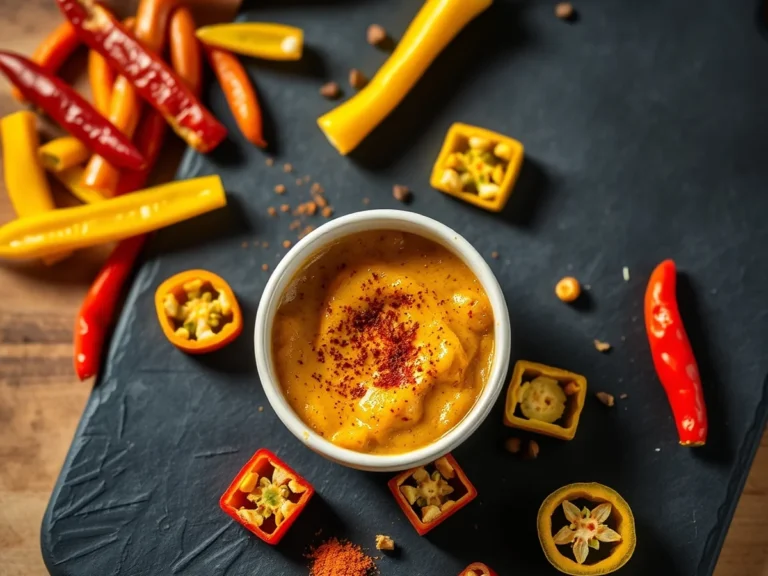
When you learn how to make homemade red curry paste, you will notice the results look quite different from the versions found on grocery store shelves. Homemade Thai red curry paste typically results in an orange hue rather than a deep red color. This occurs because fresh aromatics like lemongrass, galangal, and shallots, when processed with hydrated dried chillies, create a fibrous, naturally lighter mixture. This orange tint is often a sign of freshness, indicating that you have successfully processed your own aromatics. In contrast, store-bought options are engineered for shelf stability and uniform appearance, which often results in a vivid, consistent red color that does not necessarily reflect the intensity of the raw ingredients.
The Importance of Ingredient Preparation
Achieving the right consistency is a matter of technique. Because dried red chillies are preferred over fresh red chillies for an authentic earthy flavor, they must be handled correctly. According to research from the New Mexico State University Extension, dried red chillies require hydration in boiled water before blending to ensure they break down properly. Without this step, the paste will remain gritty rather than forming a cohesive base.
Other aromatics require specific handling to maintain the integrity of the paste:
- Galangal: Common guidance suggests that galangal is physically harder to cut than ginger and possesses a more citrusy flavor profile.
- Shrimp Paste: This is a fermented, dried product made from shrimp, which adds a savory depth to the dish.
- Processing Method: Using a mortar and pestle is the traditional method for breaking down plant fibers, which helps release the essential oils within the aromatics. If you prefer using a high-speed blender, add a small amount of liquid to assist the blades in achieving a smooth, uniform consistency.
Managing Texture and Quality
A common mistake is assuming that a vibrant red color guarantees a superior taste. In home cooking, the visual standard of retail packaging is not a reliable metric for quality. Your lighter, orange-tinted paste may possess a significantly more complex and aromatic profile than a mass-produced product. Focus instead on the quality of your ingredients, such as fresh kaffir lime zest and high-quality coriander root, which contribute far more to the final flavor than artificial colorants ever could.
When working with these ingredients, consider the final application of the paste. If you find the texture is too rustic or thick for your specific lunch bowl or curry dish, you can adjust the consistency by adding a small amount of coconut milk or oil during the final stage of blending. This helps emulsify the paste and ensures it incorporates smoothly into your sauce. By prioritizing fresh aromatics and proper preparation, you ensure the final dish has an authentic depth of flavor that remains independent of the paste’s final color.
Proper Storage and Shelf Life

To preserve the integrity of your savory aromatics, proper storage is essential. Because ingredients like lemongrass, galangal, and kaffir lime zest contain volatile aromatic oils, they begin to lose their potency once processed. Storing your blend in an airtight container is the first step in minimizing oxidation and maintaining that signature depth of flavor.
Fridge and Freezer Techniques
For short term storage, your mixture will remain at its best for up to two weeks when kept in a tightly sealed glass jar within the refrigerator. Avoid using metal containers, as the acidity in ingredients like lime zest and chili can react with the surface over time, potentially impacting the flavor. If you are preparing a large batch, the freezer is the superior method for long term preservation, keeping the mixture potent for up to three months.
To streamline your kitchen routine, follow these practical steps for efficient portioning:
- Divide your batch into single portion sizes using an ice cube tray. This allows you to thaw exactly what you need for a quick meal without exposing the entire batch to temperature fluctuations.
- Once the portions are frozen solid, transfer the cubes into a heavy duty freezer bag. This prevents freezer burn and keeps your freezer organized.
- Always label your containers with the date of preparation.
- When you are ready to cook, drop a frozen cube directly into your hot pan during the initial stage of frying. It will melt quickly, releasing its fragrant oils into the base of your dish.
Managing Quality Expectations
When storing homemade curry paste, it is helpful to note that the appearance will differ from commercial versions. Authentic homemade preparations typically result in an orange hue rather than the vibrant, deep red color often seen in store-bought options. If you notice a significant change in aroma or color after thawing, it is best to discard that portion to ensure the highest quality results in your cooking.
Before you begin the storage process, ensure your ingredients were handled correctly. Dried red chillies require hydration in boiled water before blending to achieve the correct consistency. By managing these details, you can ensure that your meal prep remains fresh and ready for any weeknight dinner. Effective preservation is a simple way to maintain the quality of your ingredients while saving time during busy work weeks.
FAQ
What is the base for this spicy aromatic blend?
Traditional versions typically rely on dried red chillies, lemongrass, galangal, kaffir lime zest, coriander root, shallots, garlic, and shrimp paste. Dried red chillies are often preferred over fresh varieties to provide an earthy flavor profile.
How do I prepare dried chillies for the mixture?
Dried red chillies require hydration in boiled water before blending. You should soak the chillies until they are pliable, then drain them well before adding them to your mortar and pestle or food processor.
Why does homemade red curry paste look different from store-bought versions?
Homemade versions typically result in an orange hue rather than the vibrant, deep red color often seen in commercial products. This natural coloration reflects the raw ingredients used, as store-bought varieties may feature additional agents to achieve a brighter aesthetic.
Can I use galangal and shrimp paste in my recipe?
Galangal is a common addition, though it is often noted that it is physically harder to cut than ginger and possesses a more citrusy flavor profile. Shrimp paste is also a typical inclusion, which is a fermented, dried product made from shrimp that provides essential depth to the final mixture.
How should I store homemade curry paste?
You can keep your mixture in an airtight container in the refrigerator for several weeks or freeze it in smaller portions for long-term storage. Using an ice cube tray to freeze individual servings makes it easy to grab exactly what you need for a quick, elevated weekday lunch.
Conclusion
The final step in your preparation is deciding whether to use your fresh mixture immediately or preserve it for future meals. If you choose to store it, keep the condiment in an airtight container in the refrigerator for up to one week or freeze it in portioned ice cube trays for several months. Crafting this aromatic blend from scratch requires patience, but the depth of flavor you achieve far surpasses any mass-produced alternative. Once you master the balance of aromatics and heat, you can easily experiment with the proportions to suit your personal palate.
Sources: bernalilloextension.nmsu.edu
You might also like: How to Make Grilled Halloumi Cheese at Home